

Africa’s Other Migrations
When most people hear the word ”migration”, they probably picture the massed herds of wildebeest and zebra on the move across the plains of Tanzania’s Serengeti and Kenya’s Masai Mara, and the drama of river crossings. This is undoubtedly Africa’s best-known migration, but it’s certainly not the only one.
For this blog, our travel experts have compiled a list of Africa’s top three mass migrations that you may not have heard of – but that you absolutely should experience. In the process, you’ll get to visit some of Africa’s most remote and beautiful wilderness areas, and witness the awe-inspiring sight of thousands or even hundreds of thousands of mammals on the move.
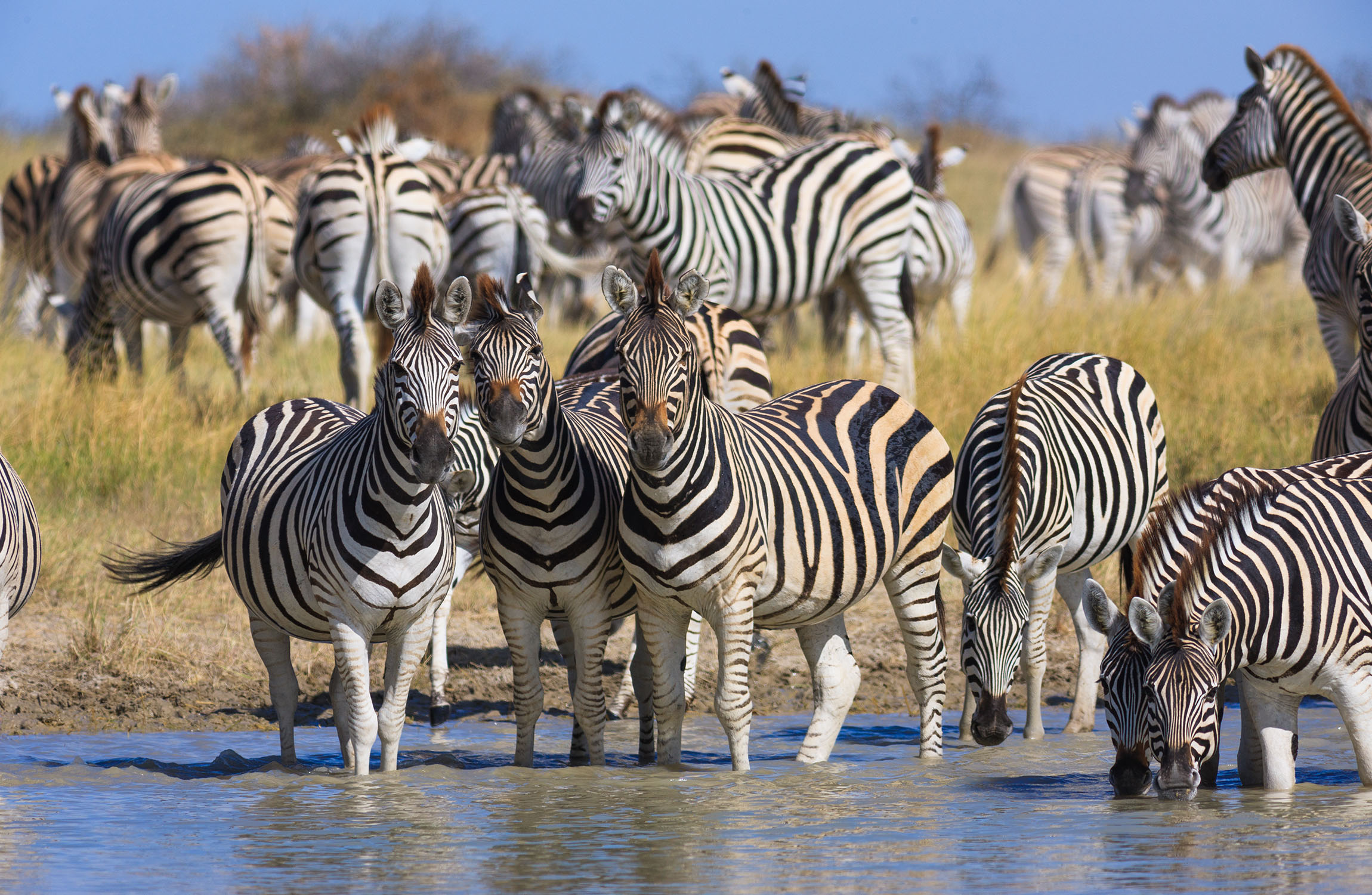
Zebra Migration, Botswana
In northern Botswana, water is the most precious commodity (more valuable even than the diamond deposits under the ground). Searching for water and fresh grass to graze is the motivation for thousands of zebra to complete long-distance roundtrips from the Okavango Delta to the Makgadikgadi Pans.
The total distance they cover is around 500km, and the zebras walk for over a month in each direction. As the rains begin, late in the year, the zebra herds start moving south towards the pans, in anticipation of a green flush of nutritious grass. This journey takes place between December and March, with the zebra returning between March and May. There is nothing quite like the sight of watching zebra gallop across the gently undulating plains of northern Botswana to make you feel alive.

Wildebeest Migration, Liuwa Plain, Zambia
Africa’s second-largest wildebeest migration offers a more intimate way to experience up to 50,000 wildebeest on the move. As with the Botswana zebra migration, it’s a long trek in search of water and fresh grazing, and involves a return trip.
The start of the rains in November is the signal for huge herds to begin moving south; similarly, as the rains peter out again in around June, the herds retrace their steps and head northwards.
As this migration is on a smaller scale to the Great Wildebeest Migration in East Africa, it offers the possibility of more intimate wildlife viewing experiences. You certainly won’t be alone in watching the herds, however – their movements are very much on the radar of Liuwa Plain’s predators, including lion, hyena, wild dogs and cheetah. This means that you may witness dramatic hunting scenes – part of the never-ending circle of life that also includes many wildebeest calves being born in November and December.
Another wonderful feature of Zambia’s Liuwa Plain wildebeest migration is the explosion of colour caused by millions of yellow flowers coming into bloom in November – this also happens again in May as the annual floodwaters recede. If you enjoy wildlife photography, you will love having the chance to capture images of masses of wildebeests running across a never-ending carpet of tiny, bright flowers.

Bat Migration in Zambia
In terms of the sheer number of creatures involved, nothing comes close to the annual Kasanka Bat Migration. This natural phenomenon can involve up to 10 million straw-colored fruit bats, which arrive in the small Mushitu evergreen swamp forest in Zambia’s Kasanka National Park between late October and early December, with November being the peak of the migration.
As their name suggests, the bats come to Kasanka to feast on ripe forest fruits as the rainy season begins (in Africa, it’s often the rains that prompt animals to migrate). These large bats – known as “megabats” can weigh up to 350g, with a 76cm wingspan. They spend the day roosting in trees, emerging at dawn and dusk to feed on the fruits.
With so many bats airborne at the same time, they can literally darken the skies above you – and you may also witness spectacular aerial hunts as eagles and other birds of prey chase the bats. The many millions that survive this threat play a vital role in pollinating trees, and in dispersing seeds. They also add up to Africa’s largest migration – a truly unmissable event!
To experience one of Africa’s less well-known migrations on your next safari vacation, contact the journey specialists at Journey Beyond today.
